News
Part 2 Cezary Jóźwaik interview – The future of underwater defence: Sonar tech and maritime security
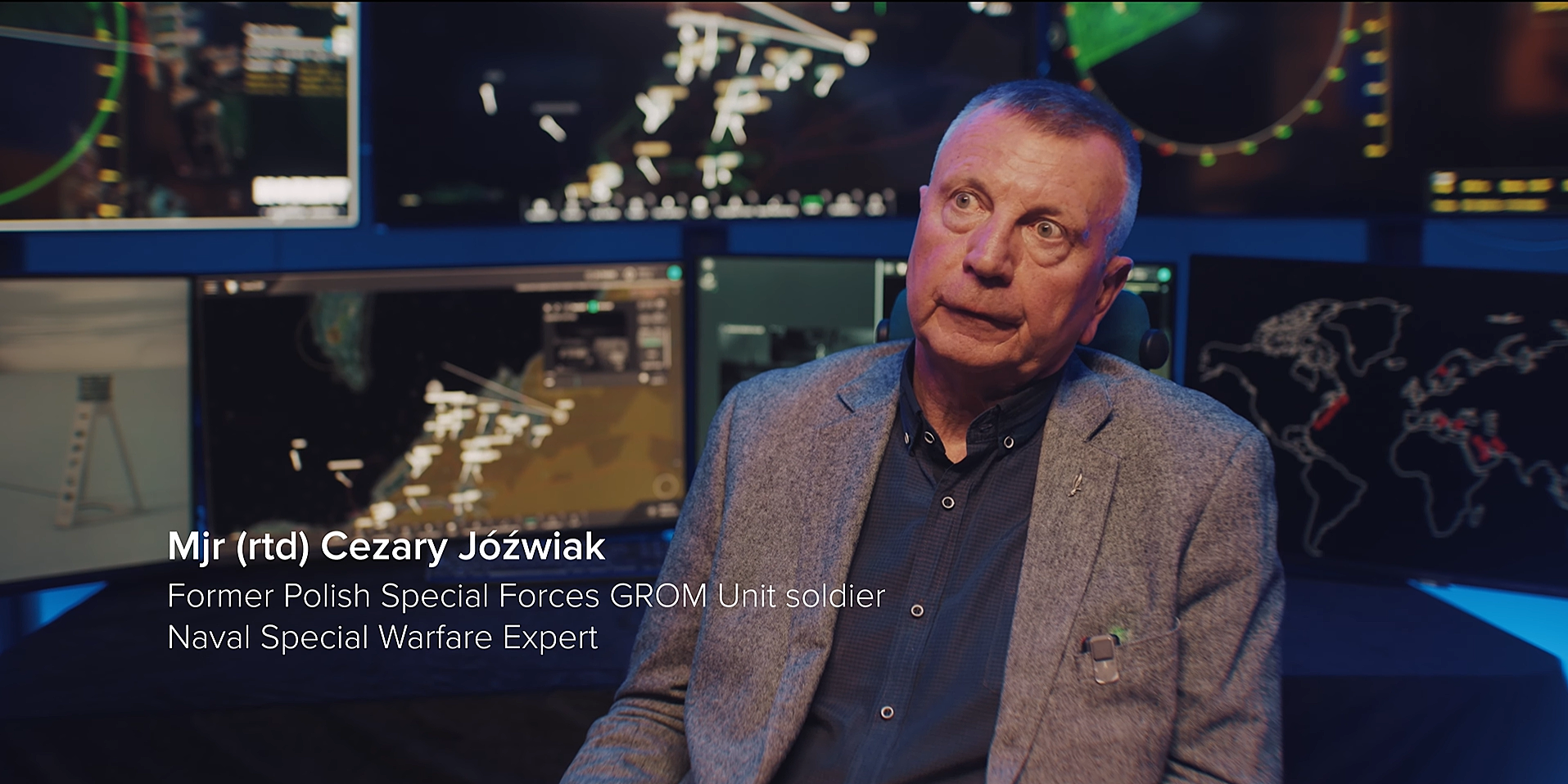
NORBIT Security presents Part 2 of our exclusive interview with Mjr (rtd) Cezary Jóźwaik, a former member of Poland’s GROM Special Forces unit and a leading authority in naval special warfare. In this instalment, Mr Jóźwaik explores the future of underwater defence, discussing the transformative role of sonar technology in securing maritime assets and critical infrastructure.
The future of underwater defence: Sonar tech and maritime security
Gain strategic insights from one of Europe’s foremost maritime security experts as he explores the technologies and innovations behind integrated systems and how they are redefining underwater defence.
A step forward in intruder detection
Modern threats demand modern tools, Mr Jóźwaik outlines how technological breakthroughs in Intruder Detection Sonar (IDS) systems have fundamentally changed the way we secure underwater environments. Unlike traditional sonar systems used by navies which are designed for large-scale vessel detection, today’s IDS solutions are purpose built to detect small underwater threats such as divers or Autonomous Underwater Vehicles (AUVs) at close ranges.
Advanced signal processing and real-time classification are enabling sonar systems to distinguish between legitimate marine traffic and potential threats with high accuracy.
System Integration for Maritime Security
One of the most compelling advancements discussed by Mr Jóźwaik is the integration of IDS with other maritime security systems. Sophisticated solutions for underwater surveillance incorporate sonar arrays with fibre-optics and underwater cameras. Whilst on the surface, patrol units utilise sonars to provide a multi-layered surveillance picture above and below the surface.
Why IDS over traditional sonar in critical infrastructure security
Traditional sonar systems are not tailored for critical infrastructure protection which requires the precision and close-range detection capabilities that IDS can provide.
As Jóźwaik explains, these critical sites are increasingly being targeted by non-conventional threats. Only IDS systems can deliver the specialised defence capabilities demanded by today’s maritime security environment.
The integrated protection requirement
At the heart of NORBIT Security’s philosophy, echoed by Mr Jóźwaik, is the principle of integrated protection. IDS functions as part of a cohesive security solution, combining hardware, software, personnel, and protocols.
This approach ensures that every stage from detection and classification to verification and response is streamlined, coordinated, and highly effective.
As the threats experienced continue to evolve, so must IDS technology. Mr Jóźwaik highlights that countries like Norway, the United Kingdom, and Germany are at the forefront of underwater security innovation and technology. With their leadership providing guidance and strategic benefits to other nations such as the Baltics.